Saturday, January 26, 2013

Taking the subway in São Paulo

The subway in São Paulo is called "Metrô". It is extremely clean and very safe; you will find no beggars or buskers inside it, nor booths selling food on the platforms, as is usual in some countries (though there are some in other floors). Trains are quite new and very well-kept.
However, it serves only a limited area of the city, it does not have many stations in which you can change from one line to another, an it can be extremely crowded (actually unbearable) in rush hours.


Logo indicating subway stations or buses that pass in front of one

As of January 2013, the ticket for one trip costs R$ 3,00 (you may change lines at will while inside the system). Tickets are only inserted in tolls to let you in, and are not necessary to let you out of stations. You may also use the "Bilhete Único" explained here.

For a map of the system, click here. But beware that the map shows not only the subway system, but also the interconnected train system.

Useful information: avoid at all costs a change at the Sé Station in the rush hour, especially if you are heading towards Corinthians-Itaquera or Jabaquara. Trains are extremely crowded and you will learn how sardines feel... not good ;(

Surprisingly, São Paulo's Metro has a quite reasonable page in English to help you understand the system. Check it out here: http://www.metro.sp.gov.br/en/your-trip/index.aspx
As a curiosity, the Yellow Line (Line 4) bears a different symbol because, unlike the other lines which are state-operated, it is operated by a private-owned company.

Sunday, January 13, 2013

TRANSPORT - Leaving the Airport

São Paulo's international airport is the Aeroporto de Guarulhos (a.k.a Cumbica - which is the name of the neighborhood where it is located); after a superficial revamping it received the funny name of GRU Airport. Be ready to face incredibly long lines at the customs, especially if your flight lands early in the morning, but try to keep your spirits up. 
After getting rid of the customs, reaching for your baggage and maybe a visit to the Free Shop, you’ll finally see yourself in the outside world, namely the airport lounge. Guarulhos is a city in the northeast of the Greater Sao Paulo area, some 30km from the center of São Paulo.
If you are not one of the lucky people who get to have someone to pick them up, these are your choices:
- bus - there is a regular bus line running from the Airport to the Tatuapé subway station (East Zone of São Paulo). Fare is R$ 4,05.
-special bus (a.k.a. Airport Service). Air-conditioned, comfortable buses at R$33,00 per person. See complete post with tips, destinations and timetables here.
- Taxis – this would be the best choice for a foreigner, though of course much more expensive. However, if you are in a group of three people and will share the fare, you’ll pay approximately the same as for the bus, and be left right where you want. See complete post here.

If your place of stay is in the city center or south zone (more common as tourist addresses), your journey will take at least 40 minutes, if you are lucky and it’s not the rush hour anymore. Otherwise it could take you as long as 1h30 to finally be able to rest in your room.

SESCs - A wealth of cultural options


As an interesting, diversified, alternative and cheap cultural option in São Paulo, the SESCs are unbeatable. SESC stands for “Serviço Social do Comércio”; it is a non-profit institution connected with an association of businesspeople from the commerce and services sector. They have several units spread throughout the city, which can be referred to as cultural centers for an easy understanding, but are certainly much more than this.
Usually housed in large, ample and purpose-built edifices, SESC units usually offer a vast array of cultural options, from exhibitions to music gigs, plays and art classes, many of which are well “out of the box” and offered at very popular prices or even for free. Their musical programs are known for proposing unheard of reunions of musicians and unconventional gatherings of singers.

Sesc Pompeia
Most units also offer some kind of eatery, from cafeterias to kilo restaurants, having in common a concern for healthy and creative alternatives. Sports also have their (wide) space in most SESC units. Even though some activities (like the use of the swimming pools) is reserved to members (though it is not difficult to become a member, which you can do for a reasonable yearly fee), many activities are open to all. For example, every summer brings a project called Sesc Verão, in which several activities are proposed to stimulate physical activities and entertainment outdoors.

Sesc Pompeia dressed up for Carnival 2013 - a special event for children
Cinesesc always proposes alternative movie festivals, and their little and friendly café in the lobby is one of the cheapest in town.
I intend to publish some posts about some of their units to give you a more detailed view. Meanwhile if you want to check what is going on, here it is: www.sescsp.org.br (unfortunately the website is only in Portuguese). A random visit usually brings nice surprises, though. Good attempts would be Sesc Pompeia, Sesc Pinheiros, Sesc Belenzinho or Sesc Itaquera.

Tuesday, January 24, 2012

Eating in SP - Pastel

After pizza, pastel is the most typical food snack in São Paulo. Basically, it consists of a deep-fried pastry with different fillings, the most traditional of which are minced meat (usually with added bits of boiled eggs and olives) or cheese.
However, gone are these boring days. Today you could find almost anything inside a pastel, from pizza (yellow cheese and tomatoes) and palmetto to dried meat and pumpkin, endives and sweet fillings such as bananas, chocolate, caramel fudge... creativity is the limit. Prices will go from R$ 2,00 to 5,00.

Pastel de Carne

If you want to taste a pastel like paulistanos do it, head to a street market (Feiras Livres). These weekly outdoor markets have a stall selling pastel in almost every end. This is so traditional that the city has been holding an annual contest to choose the best pastel sold in feiras livres. For a pastel to be considered good, its fillings must be plenty and tasteful, and, though they are deep fried, they must be dry, golden, and crunchy! Check this site for a list of the 10 finalists and the locations of the street markets where they operate:
http://vejasp.abril.com.br/noticias/dez-melhores-pasteis-de-feira

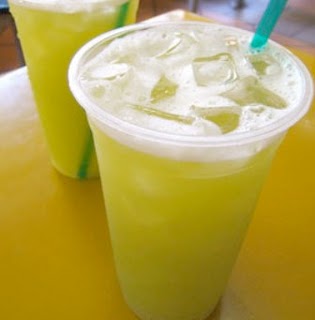
To make it a complete experience, order also caldo de cana (a kind of juice obtained from squeezing sugar cane), but beware, it is really SWEET.

Caldo de Cana - add ice and lemon drops

Since Feiras Livres close at around 2pm, you have some other options... some stalls and some specialized snack bars called pastelarias. Here we go with some addresses:

- Pastel Yoka
R. dos Estudantes, 37 (Liberdade subway station)

- Hocca Bar (home of the famous cod-filled pastel)
Mercado Municipal de São Paulo (aka Mercadão)
R. da Cantareira, 306 (São Bento subway station)

- Barraca do Zé - a stall without the street market
Pça. Charles Miller, s/n - in front of the Pacaembu Stadium
(no subway station really close, best bet is Marechal Deodoro subway station, but this implies a good walk. Streets to get there are beautiful and lined with trees, though).

- Pastelaria Brasileira
R. Turiassu, 2113 (in front of the Bourbon Shopping Center)
(Barra Funda subway station - long walk; take any bus that runs along Av. Francisco Matarazzo and get off in front of the Mall, the pastelaria is opposite)

- Pastel Croc 30 - huge 30-cm pastel
R. Sena Madureira, 450 (Vila Mariana or Santa Cruz subway stations)


Monday, January 23, 2012

Street Markets - Feiras Livres

Seemingly incongruent with the life of a hectic large city, whose main characteristics are heavy traffic and serious pollution, feiras livres, traditional street markets selling mainly fruit and vegetables, are still easy to find around São Paulo.


They are usually held once a week on a certain street (you can find a list of all feiras here, listed according to their neighborhood). Regular hours are from 7:30am to 1:30pm.
Also they are one of the few places in São Paulo where you may actually bargain! If you go early in the morning you will basically have to accept prices as they come; as hours go by salespeople start throwing their prices down and will be open to negotiate. For example, if they are selling a bunch of bananas for R$3,00, you could offer to buy two bunches for R$ 5,00, and so on. Fresh fish can also be found at reasonable prices.


The environment is usually quite friendly: salespeople - called feirantes - will offer you to taste their fruit, other people will chat with you, and almost everyone will stop at one of the stalls on the corner (no matter where you go, every corner will always have one stall) to eat a pastel. Most of all, they are typical old times' classics, places where you'll find people from all walks of life going around their regular lives.

Wednesday, January 11, 2012

A DAY OUT – Parque da Água Branca

Parque da Água Branca is a park in the west zone of São Paulo, easily reachable by subway and buses. It is a small but pretty park, whose area was previously occupied by cattle fairs, the signs of which you might still see in some of its facilities. Except on Sundays, it is so calm that you could sit on its benches for hours on end reading a book or even taking a snap!


The park has a lake with koi, a small area with books and chess pieces available for visitors, nice lanes for strolling amidst its green areas, and a large sandy area where children may play. On Saturday mornings, it holds a renowned fair selling organic fruit and vegetables, as well as other homemade organic products; on Sunday afternoons, it is common to find a large group of elderly people who get together to play the guitar and sing popular Brazilian country songs (a picturesque sight!).


The opposite side of the park is home to a recently opened trail amidst the trees called Trilha do Pau Brasil (Brazil wood trail), in which most trees received labels identifying their names and origin.

If you begin to feel hungry, the park does not offer much besides the coconut water and popular snacks. Although there is a shopping mall nearby where you could resort to some fast food chain, I’ll give you some other options:
The park has a secondary entrance/exit, on R. Germaine Burchard. Right on the corner you'll find a pleasant bar, for a beer in late afternoons or early evenings, called Bar do Parque.


In case you are there around lunchtime, I suggest a nearby street – across Av. Antártica - which is home to several kilo restaurants: R. Barão de Tefé.
I heartily suggest two of them:
- Sucre (R. Barão de Tefé, 137) Apart from the kilo options, the restaurant also offers a la carte items based on fish (specially cod) as the patrons also own a Portuguese restaurant
- Mussy Mussy (R. Barão de Tefé, 79) Nice and varied assortment of dishes, topped up by its magnificent desserts.
As this is an office area, most restaurants around will be crowded from midday to one p.m., so it would be wiser to go a little later.

Parque da Água Branca - Av. Francisco Matarazzo, 455

By subway:
Barra Funda subway station
When leaving the huge station, follow the signs to Memorial da América Latina. Once out, go “up”, or ask for the park or the avenue, both are widely known.

By bus:
From Av. Paulista:
875P – to Barra Funda subway station
877T – to Av. Francisco Matarazzo (bus stop right in front the entrance of the park)

From the city center, all these buses will leave you on the bus stop in front of the park:
From Parque D. Pedro:
8615 - PQ DA LAPA

From R. Xavier de Toledo (near the Theatro Municipal) :
8000 – TERM. LAPA
8400 – TERM. PIRITUBA
8677 – JD. LIBANO
8622 – MORRO DOCE
8594 – JD. D’ABRIL
8696 – JARAGUA

From Largo do Paissandu:
8686 - V. MANGALOT

Sunday, January 8, 2012

A NIGHT OUT - Karaoke

As the idea for this blog is to give out suggestions for off-the-beaten track places, here we go! Your travel guide probably suggests you should visit Liberdade, the Japanese (and now also Korean and Chinese) neighborhood in São Paulo, whose streets are adorned with typical Japanese lights and red posts, plus Japanese and Chinese restaurants, shops, not to mention an arts and crafts market on Sundays (very entertaining, actually).
But let's imagine you want to spend the night out with friends and would like to do something a bit weird, but fun... that's what I did yesterday, I spent the night singing at Samurai Karaoke (R. da Glória, 608 - Liberdade). Samurai holds an oriental restaurant on the ground floor and the karaoke room on the top floor. Entrance is R$ 10,00 for women and R$ 15,00 for men (for the karaoke room only) and you may sing as much as time allows you (hostesses take people from each table in turns, so the emptier the place, the more you sing). They've got lots of songs in Portuguese, English, Japanese, and even a good deal of songs in Italian and Spanish. You may also order food and drinks from the restaurant below. The whole place has an air of decadence, receiving loners, groups of elderly people, Japanese ladies, and even large crowds of young people celebrating birthdays... you feel somehow inside the movie 'Lost in Translation', but if you like to sing and you do have some nice company, you certainly will have a good time! The place is open from 6pm from Monday to Saturday and closes after 3a.m.


Rua da Glória is parallel to R. Galvão Bueno, the main shopping street in Liberdade. Just go one block down... Actually the area has some other karaokes, the most famous of which is Karaoke Choperia Liberdade, on the 523. This is a much larger, crowded and completely kitsch place in which you have to pay R$ 2,00 for each song you sing and sometimes wait for hours to sing one song. But the atmosphere is that of a large party, but if perhaps you don't really have a large group of friends and would like to meet some locals (and maybe singing is not really your goal) this is the place to go!